artemfinallymadeit
#Creative
#Brand
Brand system and templates created to restore consistency across the communications of a 50,000+ member global running community
001
Context
In 2022, the founder of a running club for San Francisco’s startup community reached out to me to create a logo for the club. Members met regularly for group runs, and over time, these runs became part of the community’s culture, while the club itself evolved into a space for informal networking
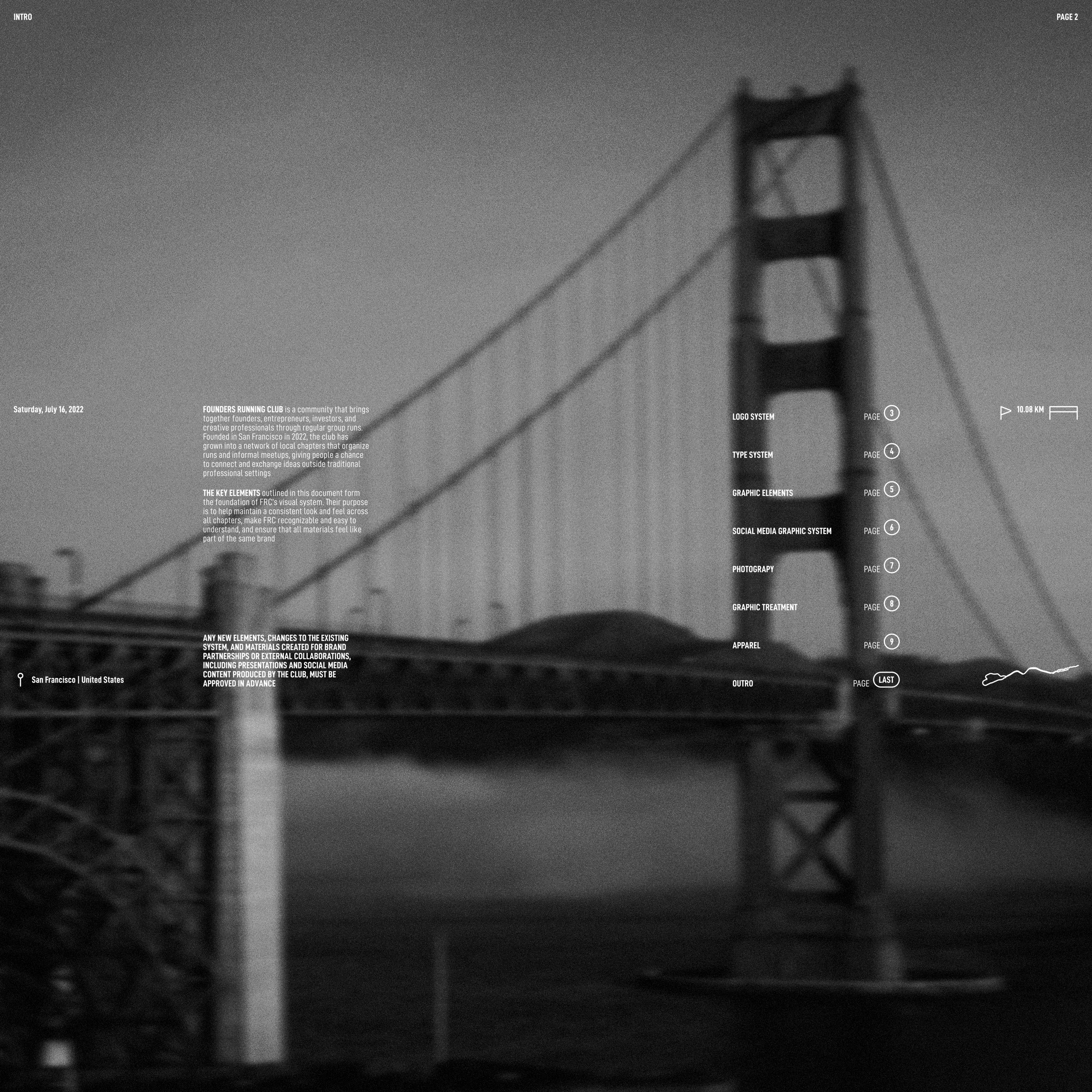
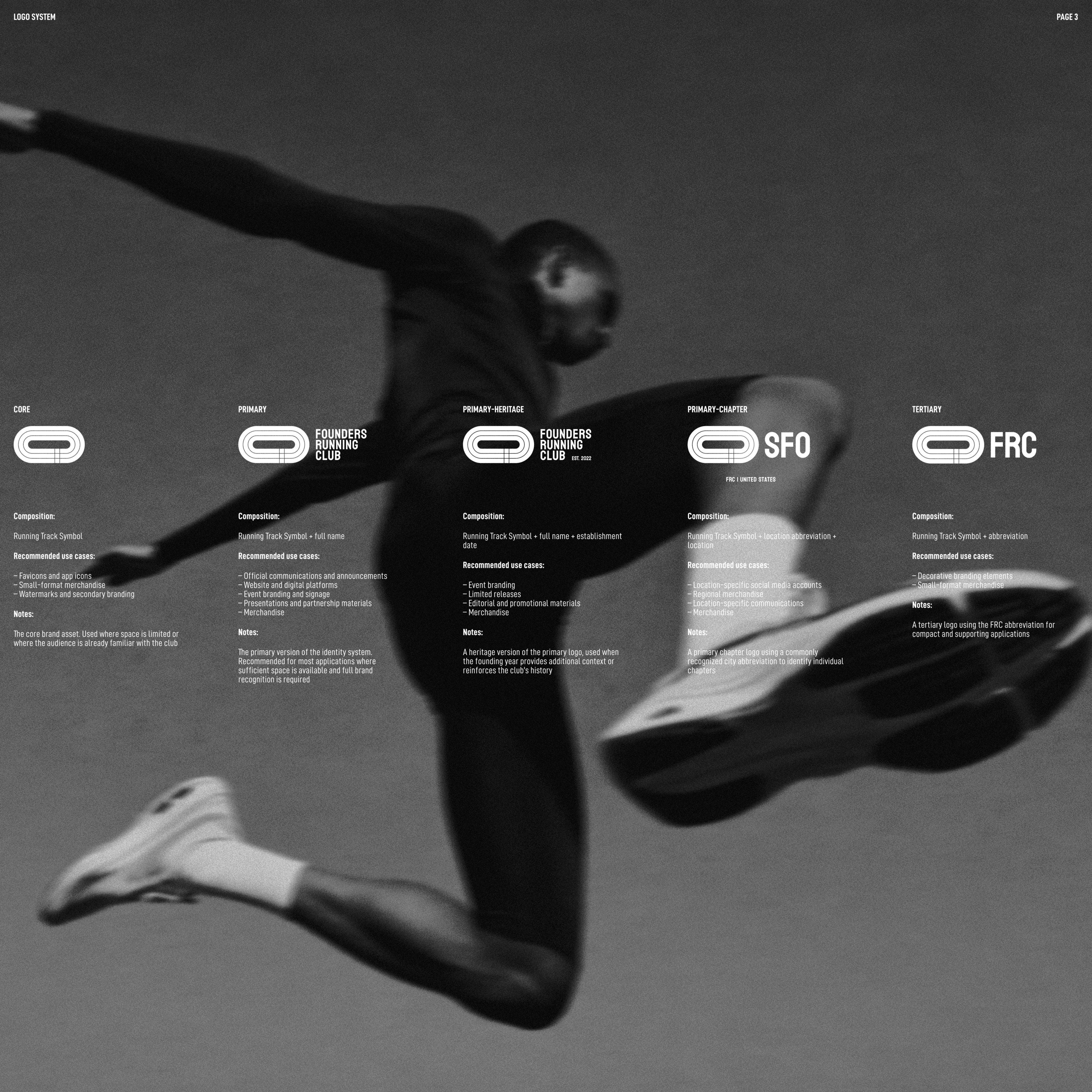
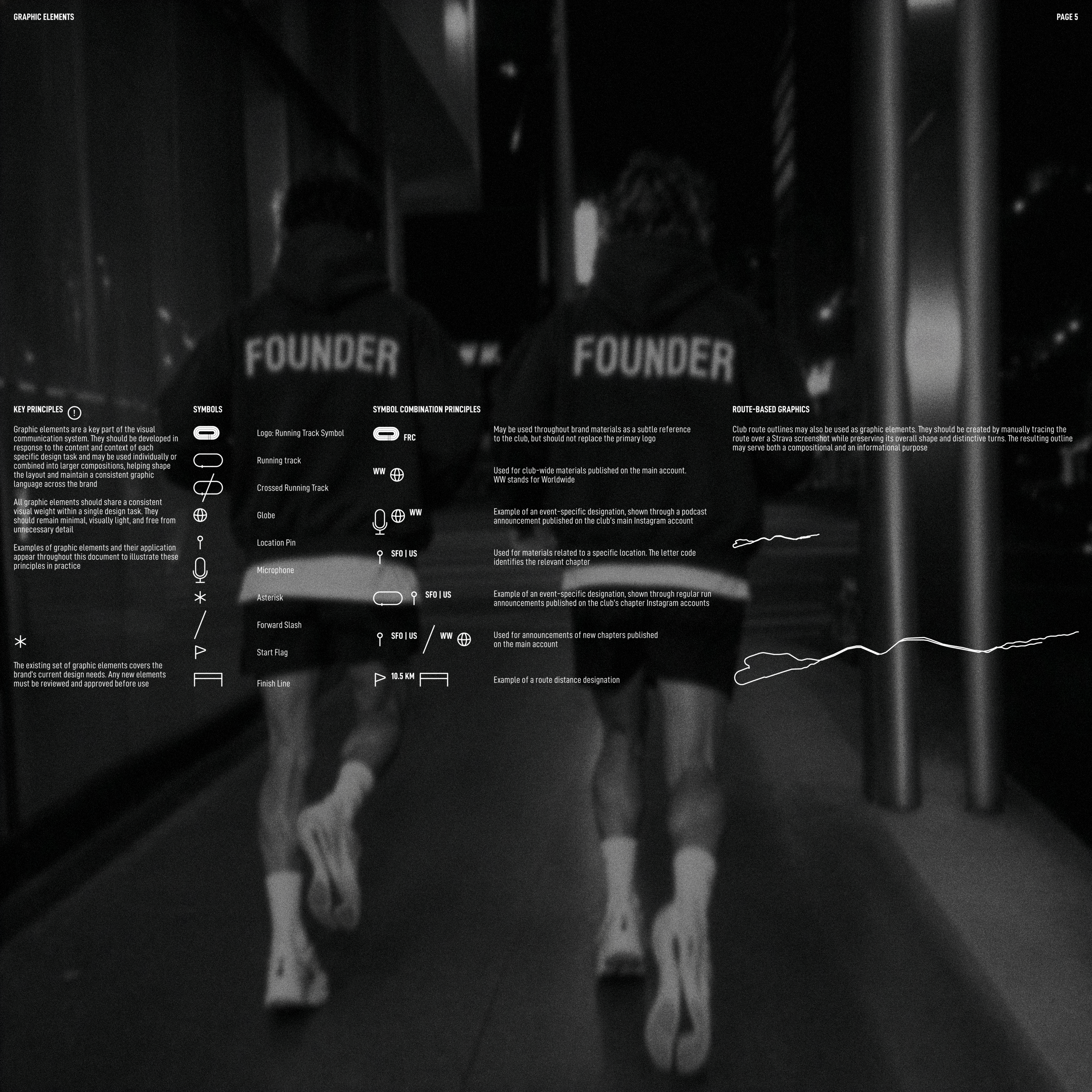
The result was a minimalist symbol based on the shape of a running track. It was paired with the full Founders Running Club name to create the primary logo, then adapted into several versions for different applications. A basic set of social media templates was also prepared for the club’s communications
002
Context
Four years later, the club had grown into a global community of more than 50,000 people, with a presence in over 60 countries across six continents, and it was still expanding. As the number of chapters grew, so did the number of city accounts. Yet without shared art direction, these accounts were shaped independently by the people running each chapter. Over time, the club’s communications lost visual consistency, and the club no longer felt like a single brand
003
Goal
Once the problem was defined, it was decided to create a unified system of templates and guidelines for the club’s visual communication and implement it across all chapters to restore consistency across the brand
004
Challenge
The main challenge was to create a template system that people with limited Figma experience could use without accidentally breaking the layouts
005
Template system
1 / 4
Main account
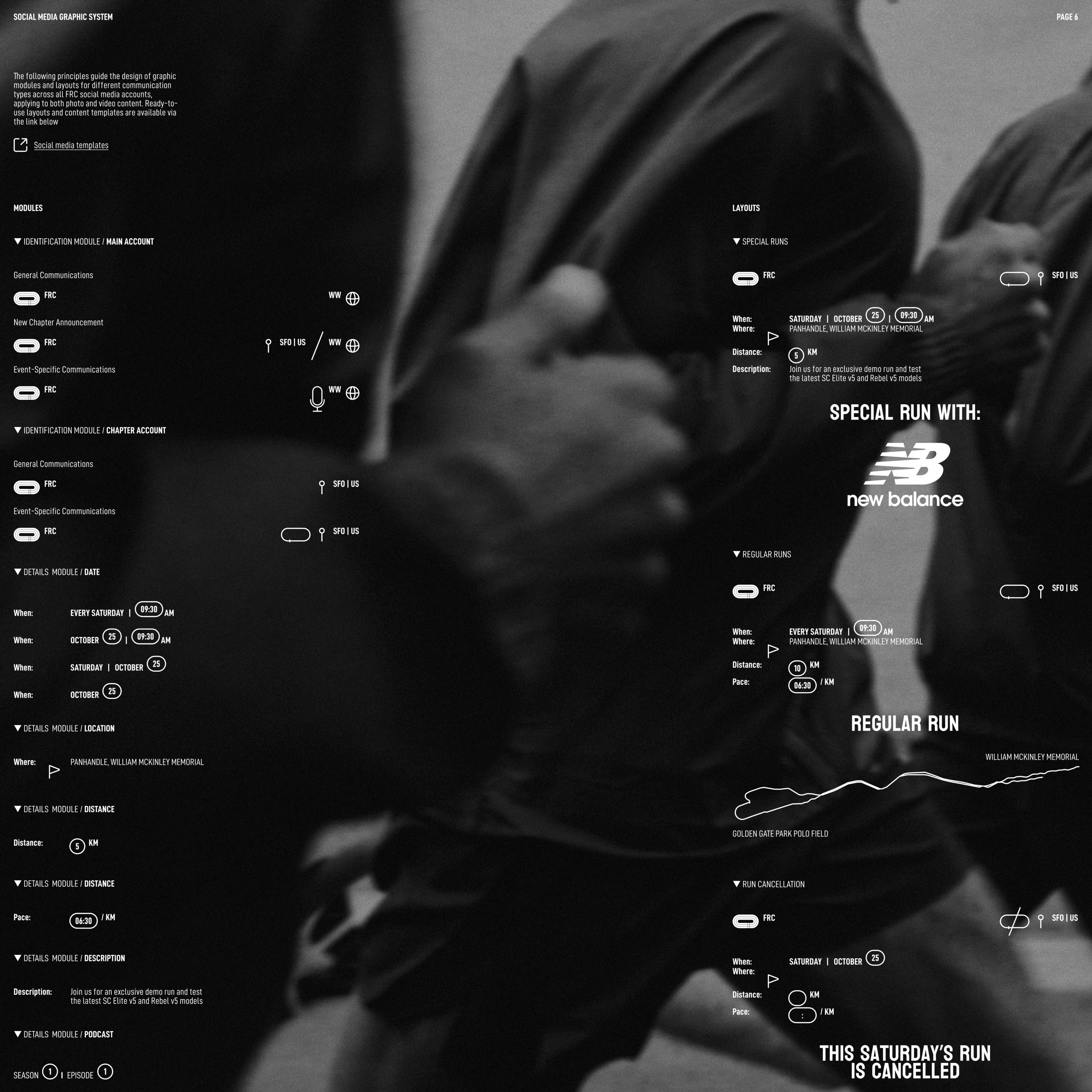
The main club account acts as a central navigation page, linking to chapter accounts through collaborative posts with each location. It also covers club news, important dates, holidays, and chapter updates that need to reach the entire community
2 / 4
Chapter accounts
An existing FRC member arriving in a new city needs to be able to open the local account and quickly find essential information about its regular runs. A newcomer needs to understand what the chapter is, see that it belongs to the wider club, and easily reach the main account. The chapter accounts were unified to support both scenarios
3 / 4
Recurring content
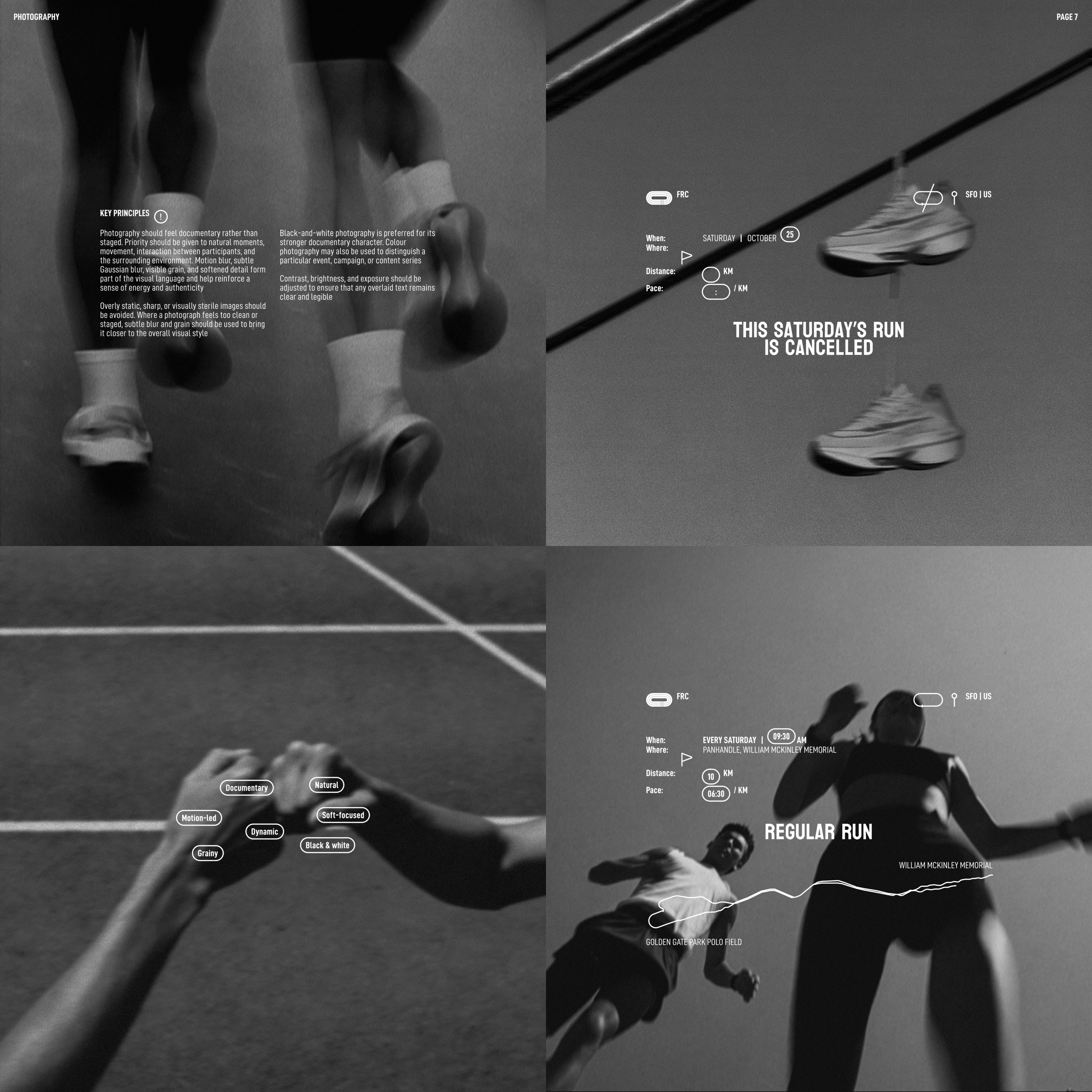
Recurring formats such as regular runs, cancellations, podcasts, and club-wide announcements were organised into a shared content system
4 / 4
Templates
To speed up the workflow and maintain visual consistency, flexible social media templates were built as Figma components using Auto Layout and configurable properties. Each template can be quickly adapted to a specific communication task by switching elements on or off, without moving or rearranging blocks manually
006
Guides
007
Last note
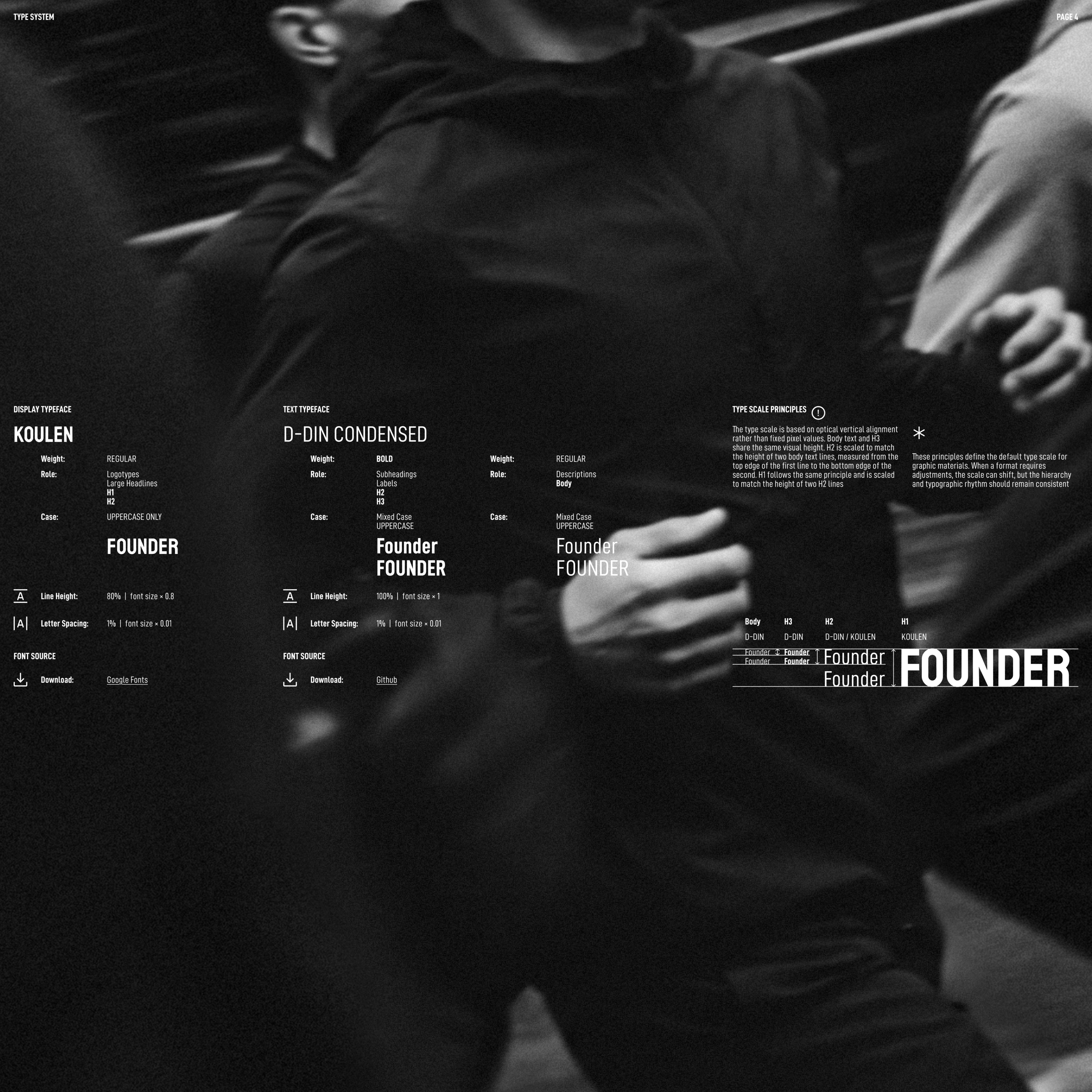
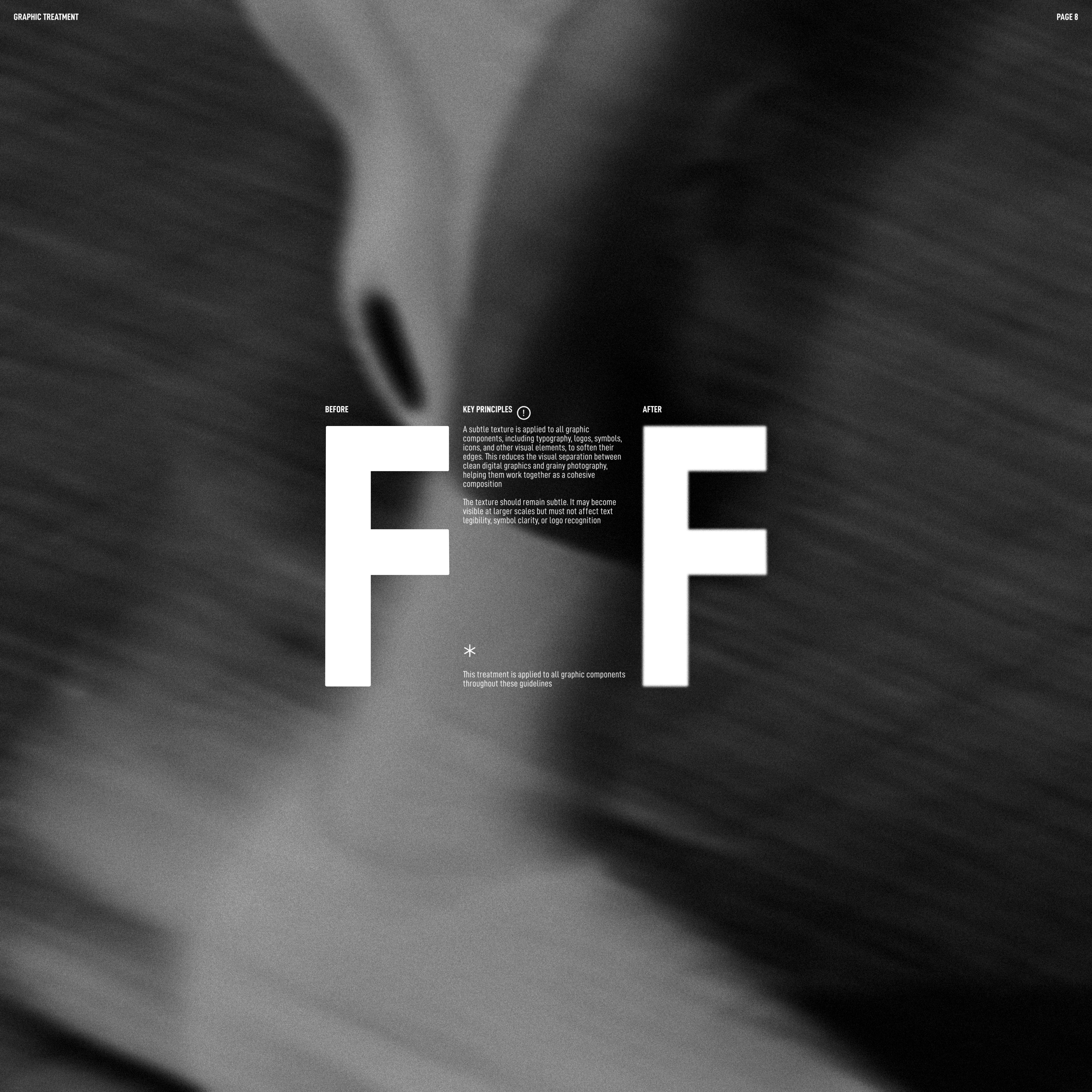
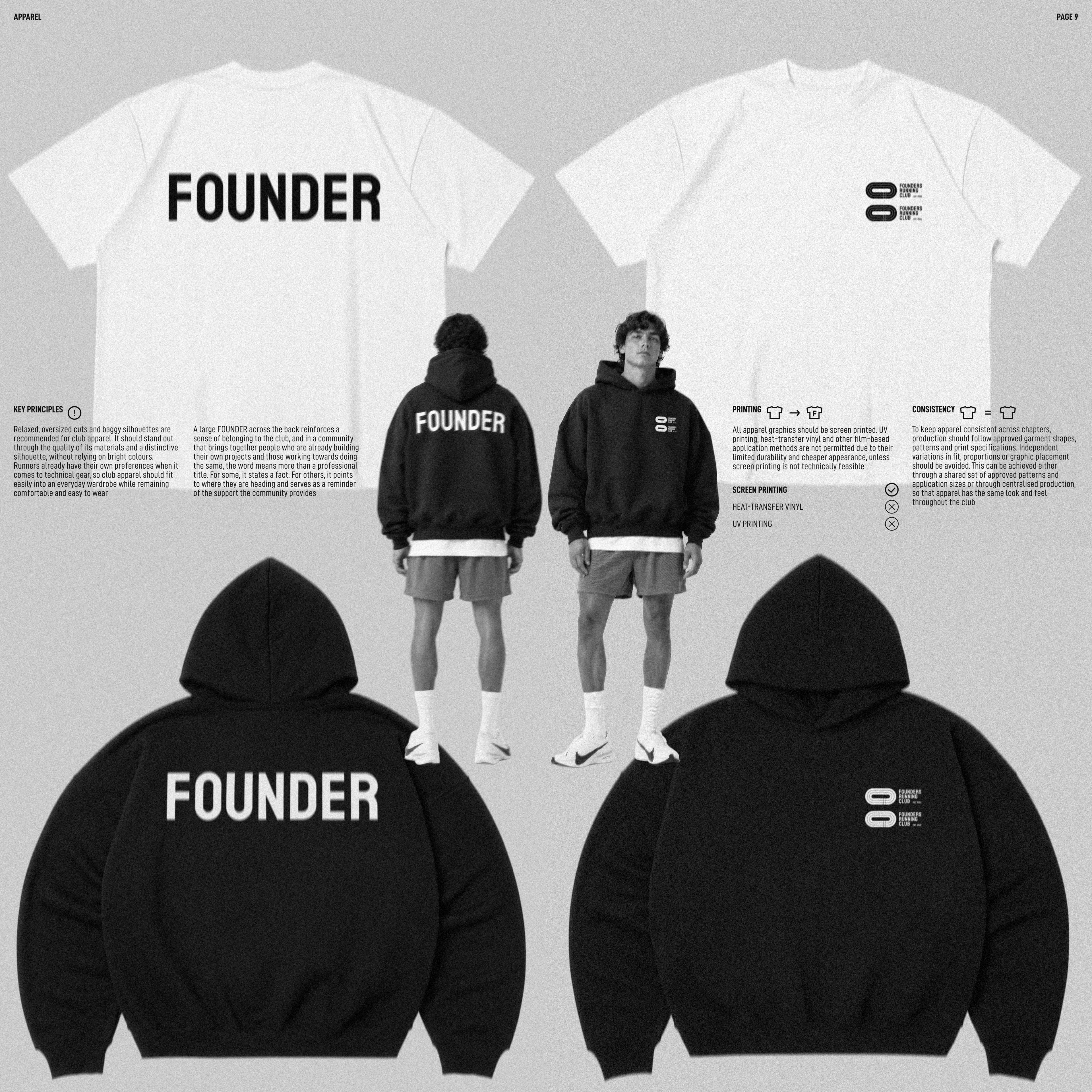
The guidelines and templates established a foundation that can evolve as the club grows and new communication needs arise. The rollout is already underway: those responsible for chapter accounts are learning how to create and style content using the new templates and guidelines
artemfinallymadeit
#Creative
#Brand
Brand system and templates created to restore consistency across the communications of a 50,000+ member global running community
001
Context
In 2022, the founder of a running club for San Francisco’s startup community reached out to me to create a logo for the club. Members met regularly for group runs, and over time, these runs became part of the community’s culture, while the club itself evolved into a space for informal networking
The result was a minimalist symbol based on the shape of a running track. It was paired with the full Founders Running Club name to create the primary logo, then adapted into several versions for different applications. A basic set of social media templates was also prepared for the club’s communications
002
Context
Four years later, the club had grown into a global community of more than 50,000 people, with a presence in over 60 countries across six continents, and it was still expanding. As the number of chapters grew, so did the number of city accounts. Yet without shared art direction, these accounts were shaped independently by the people running each chapter. Over time, the club’s communications lost visual consistency, and the club no longer felt like a single brand
003
Goal
Once the problem was defined, it was decided to create a unified system of templates and guidelines for the club’s visual communication and implement it across all chapters to restore consistency across the brand
004
Challenge
The main challenge was to create a template system that people with limited Figma experience could use without accidentally breaking the layouts
005
Template system
1 / 4
Main account
The main club account acts as a central navigation page, linking to chapter accounts through collaborative posts with each location. It also covers club news, important dates, holidays, and chapter updates that need to reach the entire community
2 / 4
Chapter accounts
An existing FRC member arriving in a new city needs to be able to open the local account and quickly find essential information about its regular runs. A newcomer needs to understand what the chapter is, see that it belongs to the wider club, and easily reach the main account. The chapter accounts were unified to support both scenarios
3 / 4
Recurring content
Recurring formats such as regular runs, cancellations, podcasts, and club-wide announcements were organised into a shared content system
4 / 4
Templates
To speed up the workflow and maintain visual consistency, flexible social media templates were built as Figma components using Auto Layout and configurable properties. Each template can be quickly adapted to a specific communication task by switching elements on or off, without moving or rearranging blocks manually
006
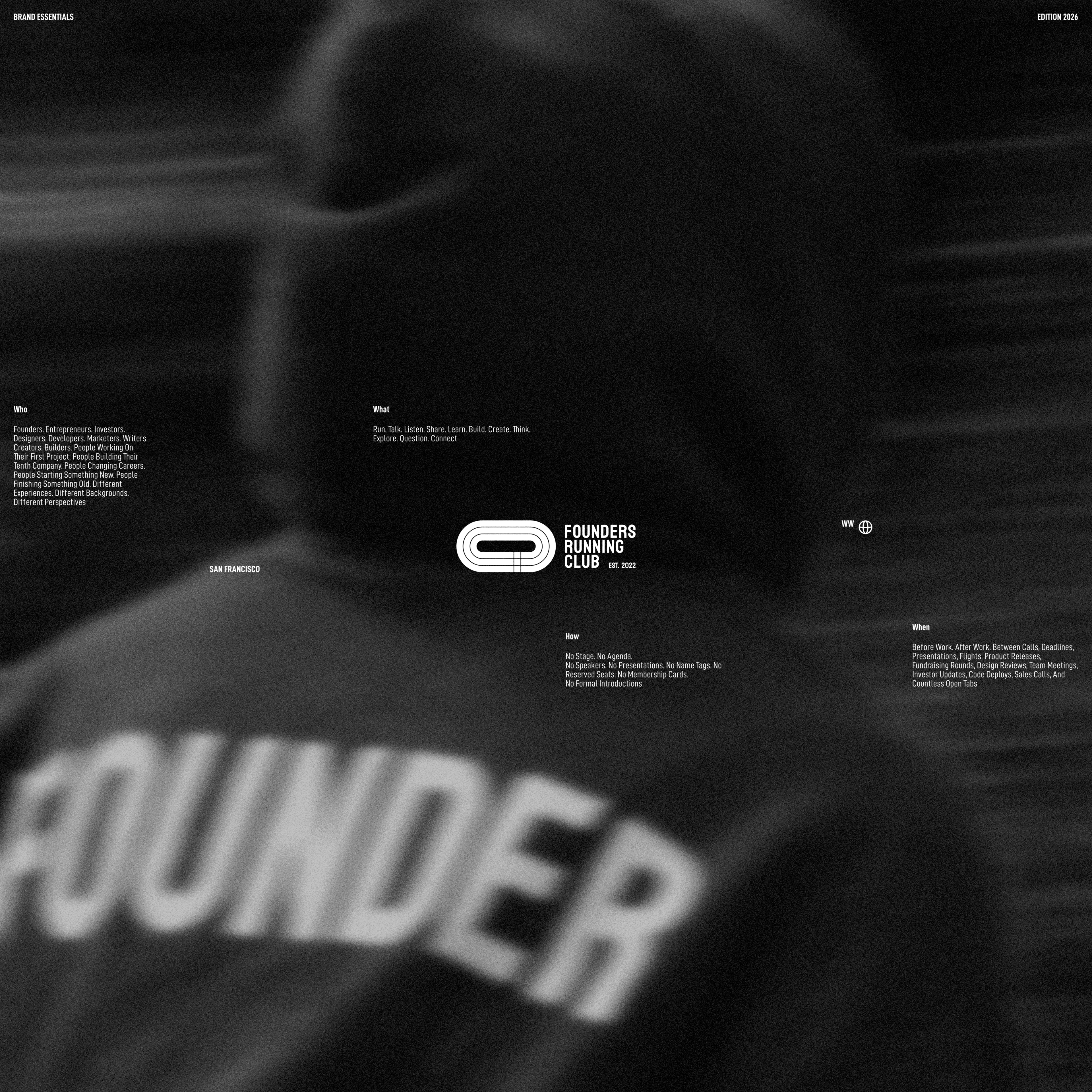
Guides
007
Last note
The guidelines and templates established a foundation that can evolve as the club grows and new communication needs arise. The rollout is already underway: those responsible for chapter accounts are learning how to create and style content using the new templates and guidelines
artemfinallymadeit
#Creative
#Brand
Brand system and templates created to restore consistency across the communications of a 50,000+ member global running community
001
Context
In 2022, the founder of a running club for San Francisco’s startup community reached out to me to create a logo for the club. Members met regularly for group runs, and over time, these runs became part of the community’s culture, while the club itself evolved into a space for informal networking
The result was a minimalist symbol based on the shape of a running track. It was paired with the full Founders Running Club name to create the primary logo, then adapted into several versions for different applications. A basic set of social media templates was also prepared for the club’s communications
002
Context
Four years later, the club had grown into a global community of more than 50,000 people, with a presence in over 60 countries across six continents, and it was still expanding. As the number of chapters grew, so did the number of city accounts. Yet without shared art direction, these accounts were shaped independently by the people running each chapter. Over time, the club’s communications lost visual consistency, and the club no longer felt like a single brand
003
Goal
Once the problem was defined, it was decided to create a unified system of templates and guidelines for the club’s visual communication and implement it across all chapters to restore consistency across the brand
004
Challenge
The main challenge was to create a template system that people with limited Figma experience could use without accidentally breaking the layouts
005
Template system
1 / 4
Main account
The main club account acts as a central navigation page, linking to chapter accounts through collaborative posts with each location. It also covers club news, important dates, holidays, and chapter updates that need to reach the entire community
2 / 4
Chapter accounts
An existing FRC member arriving in a new city needs to be able to open the local account and quickly find essential information about its regular runs. A newcomer needs to understand what the chapter is, see that it belongs to the wider club, and easily reach the main account. The chapter accounts were unified to support both scenarios
3 / 4
Recurring content
Recurring formats such as regular runs, cancellations, podcasts, and club-wide announcements were organised into a shared content system
4 / 4
Templates
To speed up the workflow and maintain visual consistency, flexible social media templates were built as Figma components using Auto Layout and configurable properties. Each template can be quickly adapted to a specific communication task by switching elements on or off, without moving or rearranging blocks manually
006
Guides
007
Last note
The guidelines and templates established a foundation that can evolve as the club grows and new communication needs arise. The rollout is already underway: those responsible for chapter accounts are learning how to create and style content using the new templates and guidelines